

Ali Shobeiri
Placial: What Can Place Offer Visual Culture?
The adjective “placial” signals our connection as well as our preoccupation with places. Like “spatial,” which refers to the characteristics of space, “placial” encompasses place-bound qualities and place-based experiences. It underscores how we make places and how places, in turn, make us; it marks our individual relationality and collective positionality in place-worlds. However, due to the lack of sources that define placial properties, this notion has been rarely discussed in relation to visual culture and photography. By surveying primarily geographical debates about the concept of place, I would like to put forward six specific placial features in this talk, namely materiality, sociality, affectivity, temporality, eventementality and perpetuity. In doing so, my intention is threefold: first, to clarify the adjective “placial” through a geographical exploration of the concept of place; second, to shortly outline the potentials of the six placial qualities for photography; and, third, to foreground the questions and challenges the term poses for visual culture at large.
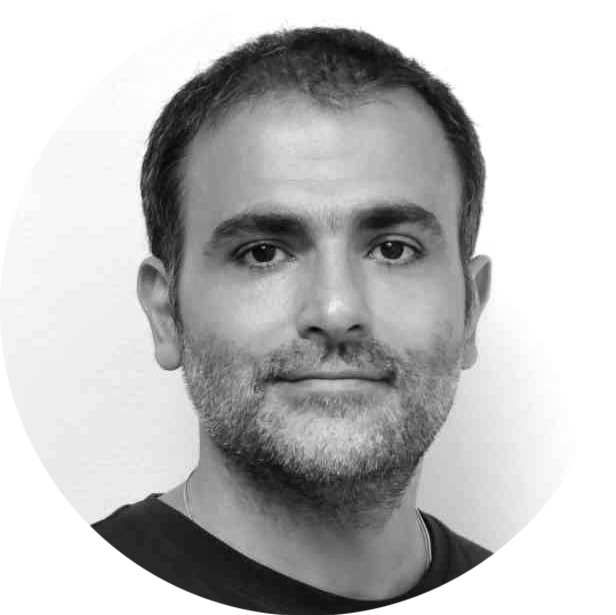
Ali Shobeiri is Assistant Professor of Photography and Visual Culture at Leiden University. His current research and publications are in the fields of photography theories, phenomenology, aesthetics, and spatial studies. He is the author of Place: Towards a Geophilosophy of Photography (LUP, 2021), and co-editor of Animation and Memory (Palgrave Macmillan, 2020) and Psychosomatic Imagery: Photographic Reflections on Mental Disorders (Palgrave Macmillan, 2023), Virtual Photography: Artificial Intelligence, In-game, and Extended Reality (Transcript Publishing, 2024), and Oikography: Homemaking through Photography (LUP, 2025). His upcoming books are: Aquatic Thinking in a Fluid Age (co-authored) and Photography / Intensity / Measure (co-edited).
Gillian Rose
Placeholding: how the mandate to be smart brings cities to digital life
This talk will explore the visual culture of what Orit Halpern and Robert Mitchell call ‘the smartness mandate.’ The smartness mandate, in brief, is a neoliberal entrepreneurial discourse that assumes that the world is a dynamic system in permanent crisis, and that the necessary resilience to weather such crises requires the computational analysis of big data. Cities are a key site through which the technologies and imaginaries of the mandate are enacted. Animated images are central to the urban smartness mandate in three ways: as means of visualising urban data in order to act upon it; as a way of picturing the life that emerges under conditions of such smartness; and as three-dimensional softimagery distributed across urban screens. The lecture will affirm that some animations of the mandate do indeed act as proxy-like placeholders referring to a real city elsewhere. Other animations, however, make different epistemic claims about the urban, in which the provisionality of the placeholder is entangled with simulation. In both cases, however, the forms of human life which emerge as these animated placeholders are seen enact similar forms of epistemic violence – and this becomes particularly evident when these various animations are themselves emplaced, on and between the multiple urban screens that hold them.
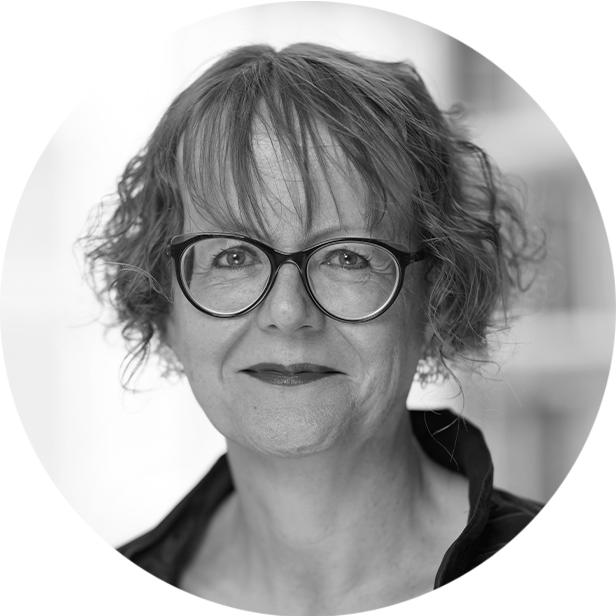
Gillian Rose is Professor of Human Geography at the University of Oxford and a Fellow of the British Academy. She is the author of Feminism and Geography (Polity, 1993), Doing Family Photography (Ashgate, 2010) and Visual Methodologies (Sage, fifth edition 2023), co-author with Monica Degen of The New Urban Aesthetic (Bloomsbury 2022) and editor of Seeing Cities Digitally (Amsterdam University Press, 2022). Her next book is titled Animated Urbanism: Bringing Cities to Smart Digital Life and will be published by Minnesota University Press next year.
Munem Wasif
Imaginary Geographies
The talk proposes image-making through refusal as a way to rethink photographic space and the world we inhabit. Rather than relying on image production or visual documentation, artists and communities cultivate spaces of memory, imagination, and resistance through oral testimony, archival revision, ecological knowledges, seed-keeping, and the writing of letters. These practices reclaim agency in contexts where representation is politically constrained. Three case studies illustrate how refusal becomes a spatial strategy. First, Rohingya oral narratives formed during crossings of the Bay of Bengal disrupt the territorial logic of the nation-state, generating counter-spaces of lived experience without relying on photographic evidence. Second, research-based artistic work in the Bengal Delta uses drawings, indigenous seeds, and community storytelling to revive disappearing histories, forging place through ecological memory rather than cartographic boundaries. Finally, in Palestine, through letter-writing and practices of care, they cultivate intimate, relational spaces that resist the extractive tendencies of the violent images we consume every day. Together, these examples reveal how absence, withholding, and alternative forms of making can open imaginary geographies—spaces constituted not by visual authority but by lived memory, political struggle, and collective imagination.
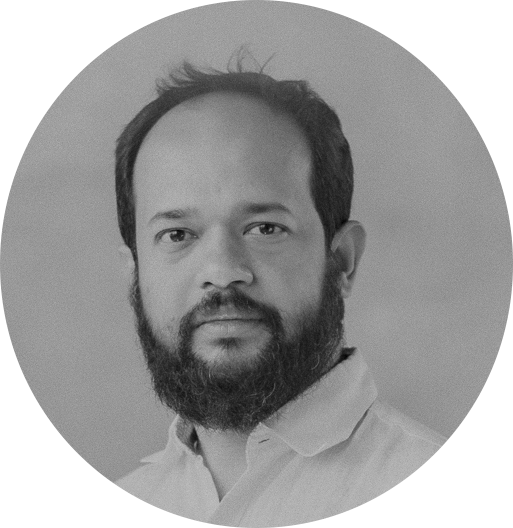
Munem Wasif’s photography and film investigates complex social and political issues with a humanistic language, by getting close to the people, physically and psychologically, dealing with multiple questions and contradictions. Expressionistic in style and long-term in method, Wasif often experiments beyond the tradition, tests the possibilities of fiction, by borrowing a familiar documentary language. His interest is often on the concept of ‘documents’ and ‘archives’ and it’s influence on addressing politically and geographically complex issues. His work exhibited at Centre Pompidou, Palais de Tokyo, Victoria & Albert Museum, Musée De L’ Elysée and Sharjah, Singapore, Gwangju biennale. He has been a co-curator of Chobi Mela since the festival’s eighth edition in 2015, and has curated two major survey shows for the festival since then: of legendary Bangladeshi photographer Anwar Hossain (Chobi Mela VIII, 2015), and Nasir Ali Mamun (Chobi Mela IX, 2017). Together with Mahbubur Rahman, he also co-curated 1134 – Lives not Numbers (2014), an exhibition paying tribute to the garment workers who lost their lives in the Rana Plaza factory disaster. Wasif’s book publications include Kromosho (Nokhta, 2025), Belonging (Clémentine de la Feronnière Editions, 2013) and Salt Water Tears (Images Plurielles, 2011); and together with Tanzim Wahab, he has published two editions of Kamra, a Bangla-language anthology of essays on photography. He was a Fellow at the Wissenschaftskolleg zu Berlin, Germany from 2020-2021. Munem Wasif received Robert Gardener fellowship in 2023 to work on the critical history of indigo in Bengal.